Wattpad Novel

Thursday, October 27, 2011

Drug Myth: Loratadine is a No-Drowse Anti-Allergy Relief

Antihistamines or anti-allergy drugs are regarded as the first-line of relief for symptoms of hay fever and skin allergies. There are two types of antihistamine drugs- the first generation and the second generation. While the old, FGA or first generation antihistamines (chlorphenamine, diphenhydramine etc.) include anti-allergies that induce drowsiness or sleepiness, the newer, SGA or the second generation antihistamines (loratadine, fexofenadine and cetirizine) are considered as non-sedating antihistamines.

Between the two types, the SGA drugs are regarded as safer because these have least CNS side effects. The FGA on the contrary, may increase the risk for vehicular accident and injuries at work.

Loratadine as a second generation antihistamine is popular for its non-drowse effect. Claritin, a brand name of loratadine even have a ‘no-drowse’ statement in its label. However, other loratadine brands such as Allerta (Amherst lab/ UAP), Lorahist (JustRight Pharma) and Lergicyl (Eurowest/ Basic Pharma) reveal sedation as an adverse reaction. So does this mean, loratadine is also a sedating allergy drug?

Image source

Loratadine facts

Loratadine is known as a long acting non-sedating antihistamine normally taken once a day. It is a non-prescription antihistamine or anti-allergy drug that can be taken with or without food.
Loratadine is indicated as a relief of symptoms of chronic urticaria and other skin allergy. It is also a drug of choice for symptoms associated with allergic rhinitis or hay fever as sneezing, nasal itching, ocular or eye itching.

Loratadine is classified as a tricyclic antihistamine, closely related to tricyclic antidepressants such as Amitriptylin (Elavil) and the antipsychotic quetiapene.

Common brand names and availability

As a single drug form:

Allerta syrup and tablet (UAP)
Claritin syrup and tablet (Schering-Plough)
Clarihist tablet (International Apex)
Flamitin tablet (Flamingo/ Pasteur Pharma)
Immunix tablet and syrup (Unique/ Ambica)
Lergicyl tab (Eurowest/ Basic Pharma)
Loratyne tab (New Smart Formulae)
Loraped syrup (Pediatrica)
Lorahist tab (Unison/ JustRight Pharma)
Lorano tab (PT Prma Hexal)
Zylohist tab (Zydus Cadilla/ GX International)

In combination form:

Claricort tab (loratadine with betamethasone ) (Schering-Plough)
Clarinase tablet and syrup (loratadine with pseudoephedrine) (Schering-Plough)

Common contraindications and special precautions

Loratadine is contraindicated with people who have hypersensitivity to the drug and those with liver problems. As for pregnancy, loratadine safety is still not established. Loratadine is excreted in milk thus; its antihistamine effect can also be obtained by the infant. Most doctors would prescribe loratadine for kids below two years old; however as an OTC drug its label or leaflet may include a precaution for kids under 2 years old.

Common adverse reactions

These include fatigue, somnolence, headache, dry mouth, gastrointestinal disorders as gastritis, nausea etc. and rare cases, allergic symptoms as rash. Other observed side- effects include alopecia, anaphylaxis, tachycardia and palpitations.

Common drug interactions

Loratadine causes toxicity when taken with amiodarone- anti arrhythmic drug and with nefazodone hydrochloride- a phenylpiperazine antidepressant. In addition, its plasma concentration may also increase with ketoconazole, erythromycin or cimetidine.

Loratadine as a less-sedating antihistamine drug

Tracing the origin of the drug, loratadine is a tricyclic antihistamine structurally related to Amitriptyline- a tricyclic antidepressant product which is also under the CNS stimulants. Tricyclic antidepressants are agents that are used to treat major depressions. These agents have two groups, the dimethylamino compounds which tend to be sedative and the monomethyl relatives that tend to be stimulatory. With Amitriptyline, this product is the most sedative of the tricyclic antidepressants. More to this, loratadine is also connected to antipsychotic quetiapene which is considered as the most sedating of all the anti-psychotic drugs.

Interestingly, what makes loratadine less sedating than other antihistamines is because it only penetrates the blood brain barrier a little. In the brand Claritin, 'the no significant sedative property' is cited at the daily recommended dose of 10 mg.

Taking loratadine safely

As a less-sedating anti-allergy drug, loratadine may also cause drowsiness. Individuals must also be advised that this inconvenience may occur and may affect tasks as driving or other activities that needs concentration. An interaction between alcohol and loratadine has not been shown; however, it is still best to avoid excessive liquor drinking while on loratadine medication.

Loratadine is an OTC drug, without the privilege of specific instructions from a physician. Do not hesitate to ask assistance from the pharmacist or pharmacy personnel to avoid over dosing particularly with loratadine liquid forms for kids.

Important:

Loratadine are for mild allergies only. In cases of serious conditions, a physician’s advice is the best. Like any other medications, loratadine may not be for you, observe yourself intently and if an untoward reaction occur, discontinue the medication and seek medical help as soon as possible.

© Phoenix Montoya @ March 8, 2011


References:
  1. http://www.mims.com/Page.aspx?menuid=mng&name=Allerta+Tablet+tab&brief=true&h=loratadine&CTRY=PH&searchstring=loratadine
  2. http://www.medscape.com/viewarticle/406736
  3. http://www.mims.com/Page.aspx?menuid=mng&name=Lorahist+tab&brief=true&h=loratadine&CTRY=PH&searchstring=loratadine
  4. PPDr 5th Edition
  5. Wilson and Gisvold’s Textbook of Organic Medicinal and Pharmaceutical Chemistry 9th Edition
More articles by this author:

Is It OK to Break a Medicine Tablet?

The strength of a medicine depends on the patient’s age, body mass and the severity of the disease. Physicians have two major reasons on why they resort into advising a patient into breaking a tablet.

The first one involves economic reason. Hypertensive patients for instance, need their maintenance drugs daily to control high blood pressure. As a financial aid for these people, doctors tend to advise them to buy an antihypertensive drug with a double strength then have them divide the tablet into two or according to the required drug concentration. The first part is to be taken immediately while the other half or halves are saved for future uses. Medications with greater doses are often cheaper when divided or split.

The second reason is the drug unavailability. For a child patient, physicians instruct their secretaries to divide a tablet in cases that only an adult drug is available. A paracetamol 500mg tablet for example is cut so that half of it can be agreeable for a seven year old patient who only needs a 250mg strength.

Splitting a tablet is as simple as doing arithmetic, as logical as taking two 250mg capsules of amoxicillin if someone needed an adult dose or giving a baby a 3.5ml dose of a cough formula when no drops dosage form is available. But we may wonder, in the case of a tablet medication - are there no complications in cutting a tablet? Is this really recommendable for financial reasons?

Tablet types issues

We may notice several forms of tablets. Among these are the sublingual, the coated, the multi-layered etc. With the various types are different functions. Sublingual forms are to be taken beneath the tongue for emergency instances. While the effect is faster this way, sublingual types contains drugs that should only be absorbed through the oral mucosa because they are usually inactivated or not absorbed in the GIT.

With the erythromycin stearate as a film coated tablet, its form has two purposes; the coating prevents the patient from having stomach irritation because of the drug itself and the coating protects the inert substance from being destroyed by the gastric juices.

Tablet breaking is not advisable for tablet types cited above for this may decrease their effect and more to it, could harm the patient.

Not enough active constituents?

Besides the active ingredients responsible for the positive effect of the medication, a tablet may also include diluents, binders, lubricants, disintegrants and other additives to complete its form.

While diluents (E.g. Lactose) make up the major portion of the tablet, disintegrants are responsible for its breaking up in the process. Binders on the other hand, are adhesive substances that glue powder together that forms granules.

The manufacturing of a tablet involves mixing before compression. And one of the problems here is content uniformity. Content uniformity is defined as the equal distribution of the drug content in each tablet. This is determined on ten tablets. USP limit is 85-115% and is met if not more than one tablet is outside the limits.

One passing medicine tablet may have the appropriate active constituent but if we will cut it into two, there is no guarantee that a patient can also get half of the strength of the inert substance. It is also possible that the half side of the tablet contains the active constituent while the other half, the additives.


Image source

Will you consider breaking a tablet?
There are some tablets that are not designed to be divided. We can never be sure if we are going to get the exact strength of the drug when we cut it. Most people may claim that this method works and interestingly it does. We could think of it as a placebo effect but the thing is drugs even not divided equally have active constituents that can cure or harm. And we must be reminded that every individual has different body chemistry. Some may react to untoward reactions while the others may tolerate it. But just to be safe, tablets not designed to be cut should not be divided. There are the scored tablets or tablets that have lines - these are the tablet forms designed to be cut.

© Phoenix Montoya @ February 12, 2011


References:
  1. Compiled Notes in Manufacturing Pharmacy by Emma and Imelda G. Pena
  2. Wilson and Gisvold’s Textbook of Organic Medicinal and Pharmaceutical Chemistry 4th edition
Related articles:
More drug articles by this author:

Sunday, September 25, 2011

Medicine Tablet Types

  • Chewable tablet
Antacids and most vitamin tablets are designed as chewable types. These forms are agreeable tasting that no water is necessary for a follow up. While chewable tablets are applicable for antacids for fast relief, these types are also beneficial for people and younger individuals who are incapable in swallowing a regular tablet type.

  • Sublingual tablet
This form is placed under the tongue for immediate effect. An example is Isordil sublingual 5mg. This drug is normally administered for minor heart palpitation attacks.


Image by the author

  • Buccal tablet
Same as sublingual, the use of a buccal tablet is to make a drug work faster. However, instead of placing the tablet under the tongue, a buccal tablet is placed at the side of the cheek or between the lip gums. Like the sublingual type, a buccal tablet also contains active ingredients that should be absorbed through the oral mucosa to avoid being destroyed by the GIT.

Fentanyl (Fentora) tablet for cancer pain is a buccal tablet type.

  • Implantation tablet
Implantation tablets are also known as pellets. These types are without excipients or additives (disintegrants, colorants, lubricants etc.) Implantations tablets must be sterile because they are inserted into the body tissues by surgical procedures. An example is testosterone hormone and stilbestrol. Implantation is designed to be more compact thus, has slow solubility into the body tissues. However, these tablets have been replaced by other dosage form such as diffusion controlled silicone tubes filled with drug or biodegradable polymers that contain entrapped drug in assortment of forms.

Buclizine, Pizotifen, Lysine and Dibencozide Facts

  • Dibencozide

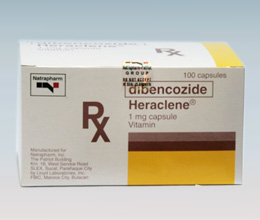
Dibencozide also known as cobalamin enzyme or adenosylcobalamin is the most active type of vitamin B12. Not only that it is important for producing new blood cells, dibencozide is also an effective appetite enhancer.

Dibencozide is usually indicated for premature babies and infants with low birth weight; for children and adults with poor appetite; and for those people who are recovering from critical cases such as strokes and depression. It increases protein, carbohydrate and fat metabolism, which indirectly stimulates appetite. More to this, dibencozide can also improve mental concentration, muscle mass and strength.


Image source

Heraclene, Aktibol, Bidicozan, Biotrefon- L, Calomide, Cobaxid and Cobazim are popular brand names of dibencozide.

Dibencozide precautions: Pregnancy and breast-feeding; gastrointestinal conditions such as ileal disease for this can reduce that amount of Vitamin B12, including dibencozide, which is absorbed from the intestine.

Dibencozide side effects: No reported side effects.

Dibencozide drug interactions: Chloramphenicol. Taking chloramphenicol for a long time might decrease the effects of dibencozide on new blood cells.

Wednesday, September 21, 2011

Herbs Alert : Drug Interaction Possibilities

If you are taking maintenance drugs like antihypertensive or oral hypoglycemic types for your high blood pressure or diabetes respectively, it is important that you check the herb or the supplement you intend to use. Ginkgo biloba for instance, is said to be beneficial for the elderly for it can help treat age-associated memory impairment including Alzheimer’s. However, if an individual is taking a diuretic or other blood pressure control medicine, gingko biloba may hinder the effect of these drugs.


Image source

Ginkgo biloba won’t also work with aspirin and other blood thinners like clopidogrel, ticlopidine, warfarin, heparin etc. This herb contains some constituents that affect blood clotting therefore, can potentiate the effect of the anti-coagulant drugs causing uncontrolled bleeding or haemorrhage.

Tramadol - Addicting Drug?

Grünenthal has promoted tramadol as an opioid with a lower risk of dependence than that of traditional opioids. Grünenthal offered a theory that, since the M1 metabolite is the principal agonist at μ-opioid receptors, the delayed agonist activity reduces abuse liability. The norepinephrine reuptake inhibitor effects may also play a role in reducing dependence.


More to this, the term ‘opioid’ has been devised to refer to synthetic morphine like compounds. Many of these substances offer the same narcotic and pain relieving properties of morphine but they are not addicting.

Unfortunately, tramadol is not one of those synthetic morphine like compounds. There are cases of tramadol dependence. The use of this medication can be addicting and the best way to avoid this is not to take tramadol frequently. There are other drug alternatives, just ask your doctor or pharmacist about them.

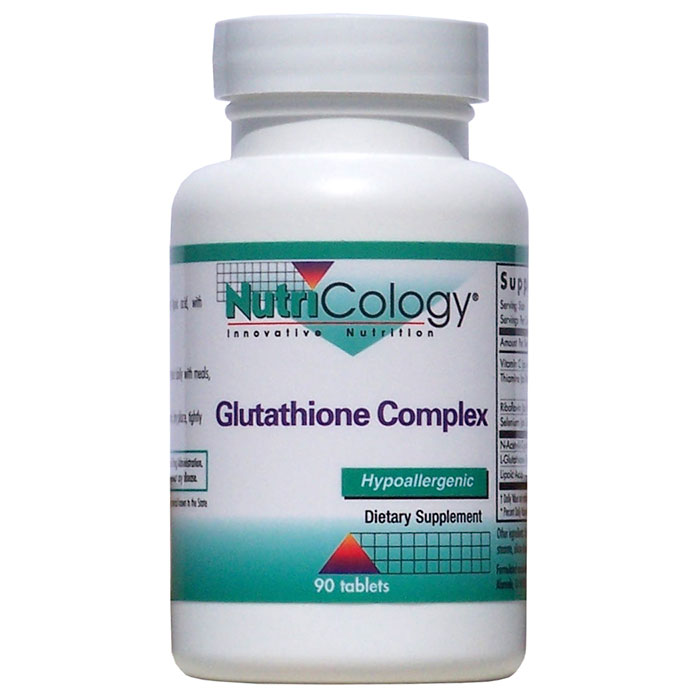
Glutathione as a Skin Whitening Supplement


Melanin is one of the two pigments responsible for the hair and skin color. While melanin comprises of the brown color, the other pigment – carotene is responsible for the yellow shade. Generally, the darker the color means the more melanin in the skin. With this, glutathione works its wonders in four ways:
  1. It binds with the color forming tyrosine (a precursor amino acid to melanin) to form a less colored pigment.
  2. It modifies black/brown/yellow melanin pigmentation (Eumelanin) to reddish white pigmentation (Phaeomelanin).
  3. It deactivates the free radicals caused by sun exposure.
  4. Its antioxidant activity lowers the rate of melanogenesis or the production of melanin.